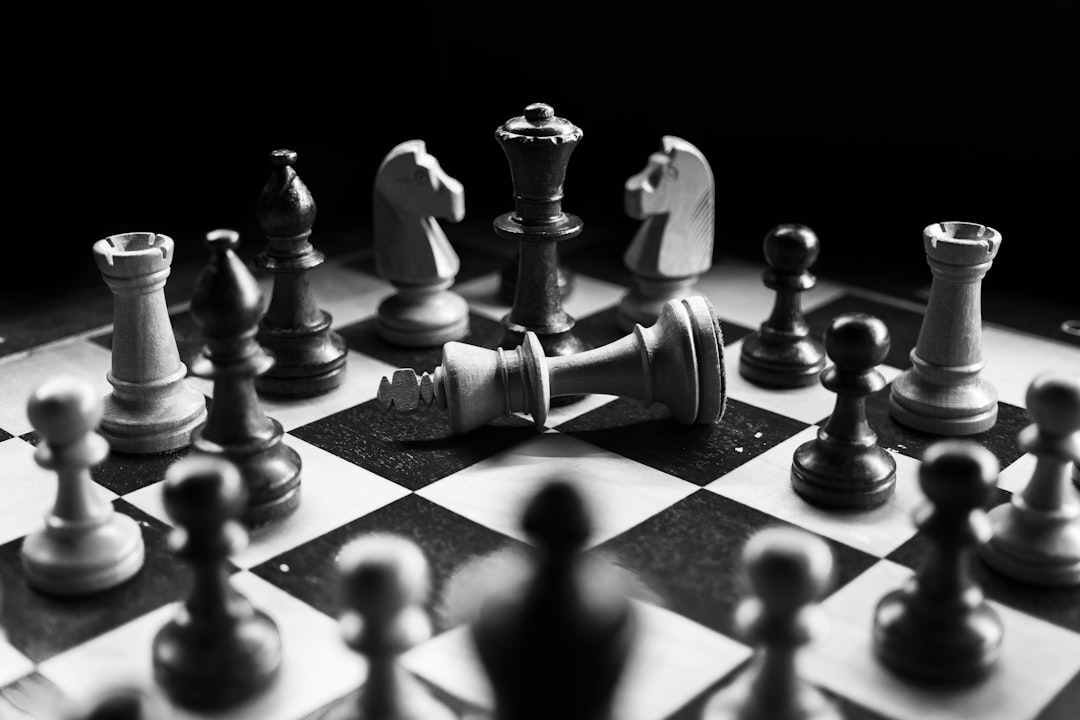
A pawn endgame is a phase of the chess game where both sides have only their king and pawns remaining, all other pieces having been exchanged off the board.
It is one of the most fundamental and instructive endings in chess. With no pieces left to generate direct threats, the outcome depends entirely on pawn promotion, king activity, and precise calculation. Two concepts dominate these endings: opposition (when the two kings face each other with an odd number of squares between them, forcing the side to move to give ground) and zugzwang (being forced to make a move that worsens your own position). A classic example: a white king on e5 facing a black king on e7 — White holds the opposition and can advance to escort a pawn to promotion.
In practice, the first reflex should be to calculate the rule of the square: if the opposing king cannot step inside the imaginary square drawn around a passed pawn, that pawn will promote without any escort. When the race is close, king activity becomes decisive — a centralized king in a pawn endgame is worth far more than any pawn manoeuvre.