ChessPivot
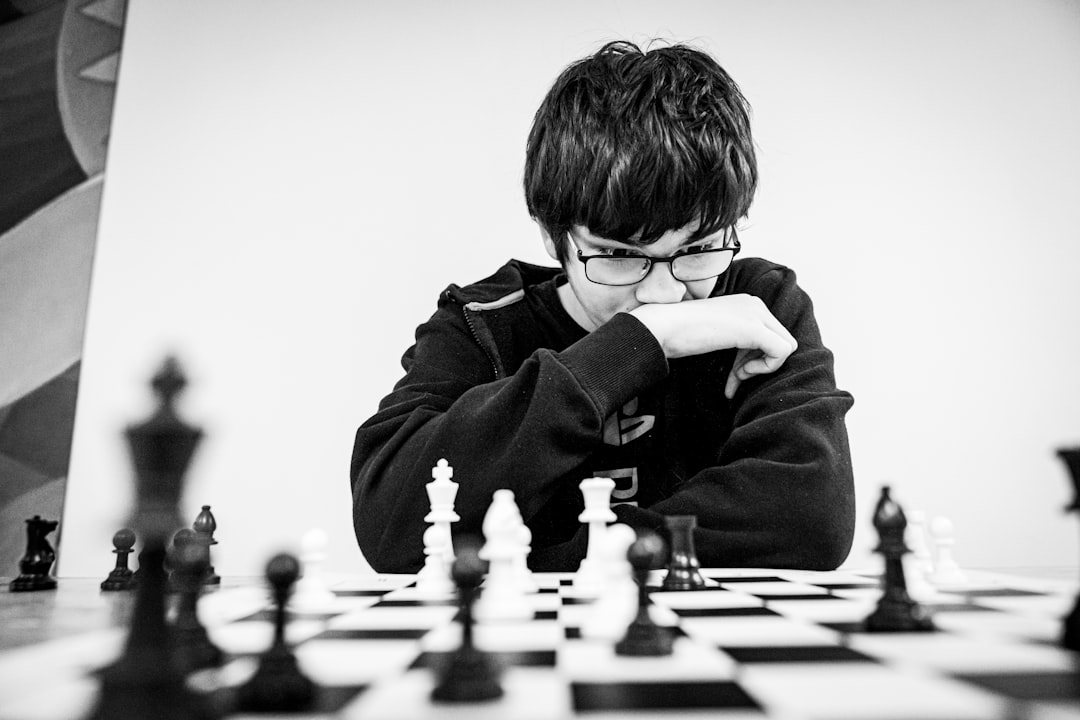
A young boy sitting at a chess board

Piece values

Material

Photo : Michal Vrba
Material

Piece values in chess are a point system used to quickly assess the material balance between the two sides. Each piece type is assigned a conventional value: a pawn is worth 1 point, a knight and a bishop are each worth approximately 3 points, a rook is worth 5 points, and the queen is worth 9 points. The king has no numerical value, as losing it ends the game.

These values are statistical averages drawn from millions of games: they reflect the general power of each piece, but not necessarily its worth in a specific position. A knight stuck on the edge of the board, for instance, may be worth far less than 3 points in practice, while a passed pawn (one with no opposing pawn on its file or adjacent files) close to promotion can be worth considerably more.

In practice, this point system is your first tool for evaluating exchanges: if you capture an opponent’s rook with your knight, you gain 2 points of material (5 − 3), which is called "winning the exchange." Before capturing or accepting a sacrifice, get into the habit of doing this quick mental calculation to avoid unintentional material loss.

How to exploit it — and defend against it

Before each exchange, calculate the point balance: if you gain more points than you lose, the trade is generally favorable. Be wary, however, of positions where your opponent sacrifices material to gain a positional advantage or a mating attack — situations where raw point counts fall short. To avoid accidental losses, always check whether the piece you are moving was defending another piece. Finally, remember that the bishop pair (having both bishops while your opponent has lost one) is often worth a half-point bonus in open positions.

8
7
6
5
4
3
2
a1
b
c
d
e
f
g
h
The bishop on c4 (3 pts) targets f7; the knight on f3 (3 pts) threatens the opponent’s pawn on e5 (1 pt). Use piece values to assess these potential exchanges.

Related terms

Frequently asked questions

Why does the king have no point value?
The king cannot be traded away — losing it ends the game. Assigning it a numerical value would therefore serve no purpose in exchange calculations. It is sometimes said to have "infinite" value, placing it entirely outside the point system.
Are a knight and a bishop worth exactly the same?
By convention both are worth 3 points, but their actual effectiveness depends on the pawn structure. A bishop is generally stronger in open positions with clear diagonals, while a knight excels in closed positions where its jumping ability lets it bypass pawns.
Can you win a game while being down in material?
Yes, absolutely. Piece values are guidelines, not absolute rules. A well-conducted attack, a decisive positional advantage, or a mating plan can compensate for a material deficit. This is the principle behind a sacrifice: accepting a point loss in exchange for superior compensation.

Analyze your games for free

Spot your recurring mistakes and turn them into progress with ChessPivot.

Analyze my games