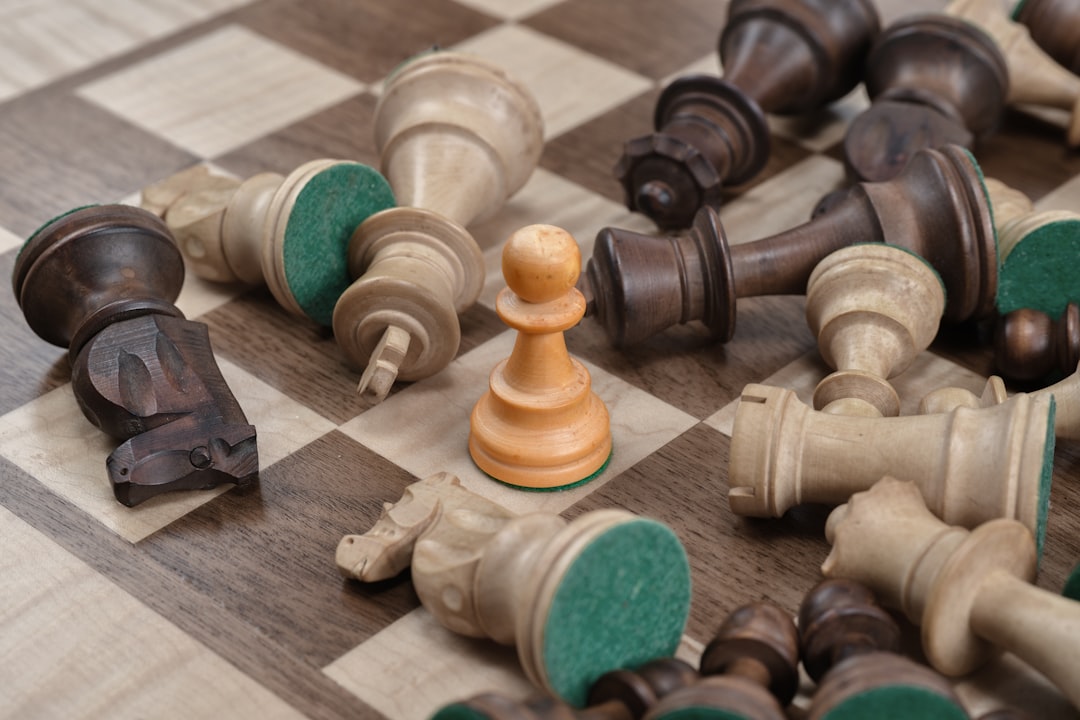
Pawn tension refers to a situation where two opposing pawns face each other diagonally and can mutually capture, creating a zone of tactical and strategic uncertainty on the board.
For example, picture a white pawn on e4 and a black pawn on d5: each threatens to capture the other. The tension is unresolved — neither side has yet chosen to capture, advance, or simply leave the pawns in place. That very state of indecision drives the dynamics of the position. Resolving the tension (by capturing) or maintaining it (by ignoring the threat) are two fundamentally different strategies, each with lasting consequences for the pawn structure.
In practice, resolving tension too early often releases pressure on your opponent: capturing immediately opens files or diagonals that may benefit the other side as much as you. Keeping the tension alive longer than your opponent gives you both a psychological and positional lever — it is your opponent who must decide how to resolve it, and that obligation can place them in a difficult spot. Always ask yourself: "Who benefits more from the resolution?"