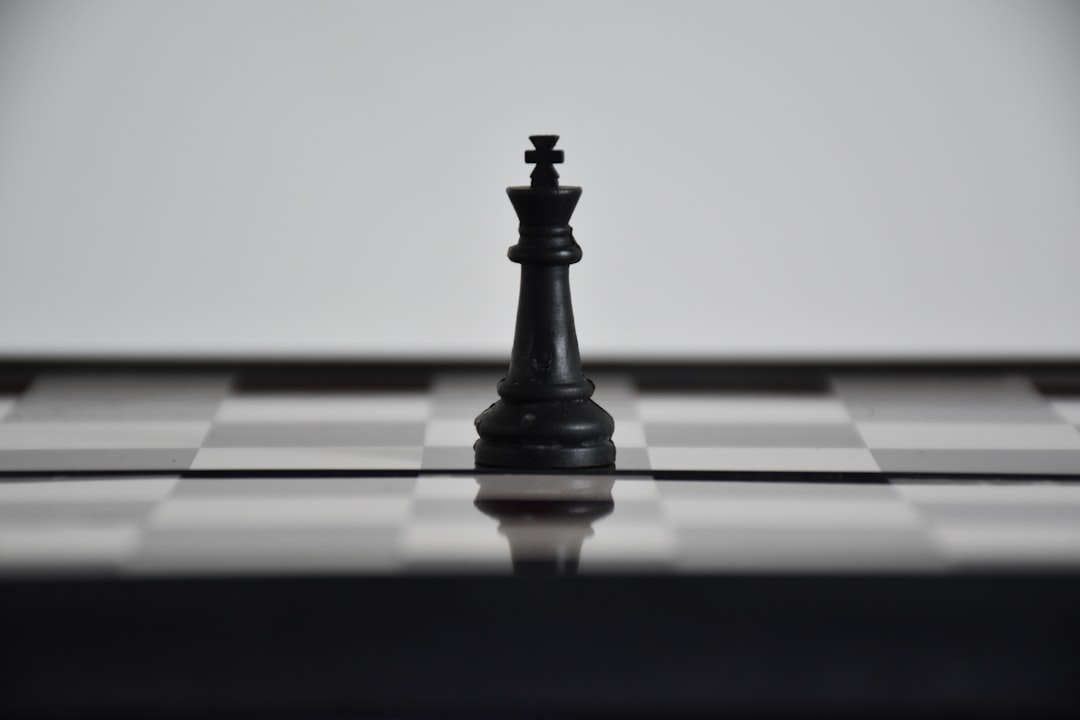
Checkmate is the decisive final position in a chess game, in which a player’s king is in check (attacked by one or more opposing pieces) and has no legal way to escape: it cannot move to a safe square, block the attack with another piece, or capture the attacking piece. The game ends immediately, and the player whose king is checkmated loses.
It is the ultimate goal of every chess game. All strategy, tactics, and manoeuvres ultimately serve to reach this position. Checkmate can occur as early as the second move — the famous Scholar’s Mate arrives in just four — or after hours of play in a complex endgame. What matters is that the opponent’s king has absolutely no escape: every adjacent square must be either occupied or controlled by the attacking side, and the check must be impossible to block or capture away.
In practice, before playing a move you believe delivers checkmate, always run through three quick checks: Can the king move to a safe square? Can a piece interpose between the attacker and the king? Can any piece capture the attacker? If the answer to all three is no, the checkmate is confirmed. Building this verification habit prevents both missing available mates and playing what looks like checkmate but has a hidden escape.